Customer: ASAP
Field of activity: sale of souvenirs and related products
Client request: to systematize sales and communications
Tasks: create a unified system for working with clients, integrate communication channels, implement a CRM, and prepare a base for scaling the sales department.
About the client
ASAP company is engaged in the sale of souvenir products through the website and other communication channels.
The business was actively developing, however, the sales and customer interaction processes were not systematized.
At the time of the project launch:
- The sales department was in the process of being formed;
- communications were conducted through various channels;
- There was no unified client accounting.
Main channels for receiving applications:
- website;
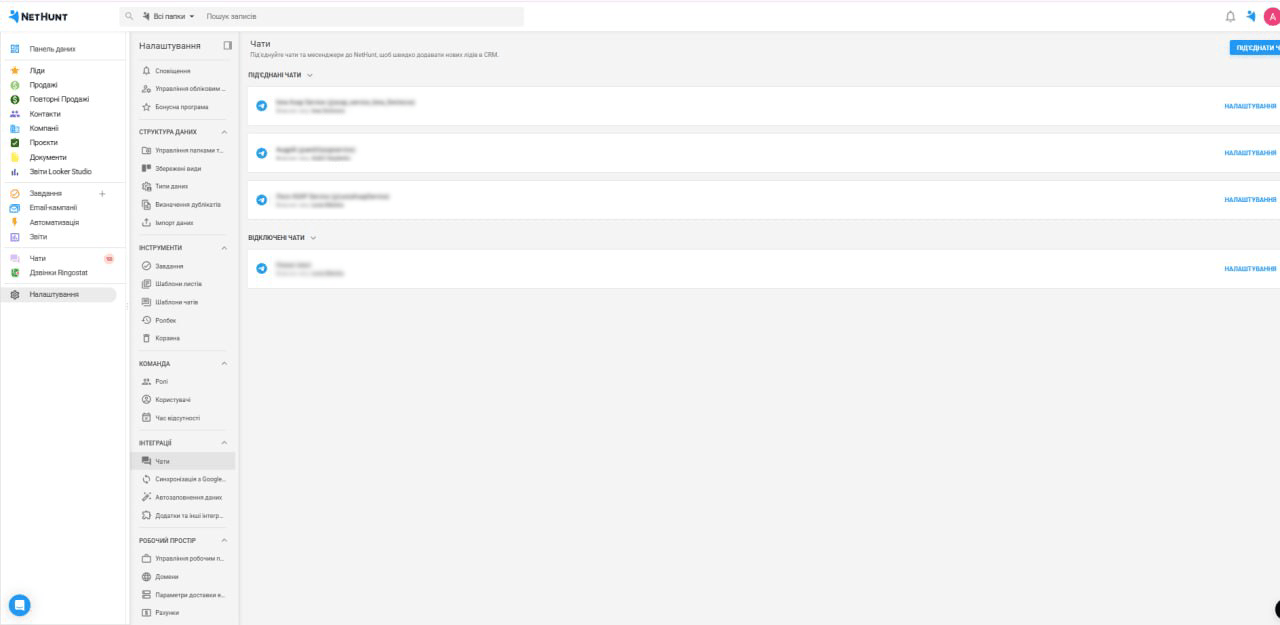
- messengers (Instagram, Telegram, Facebook);
- phone calls.
Applications were not synchronized, and the history of communication with clients was lost.
Project objectives
Before the implementation of CRM, processes were distributed across different tools, which limited sales manageability.
This led to the following limitations:
- there was no single point of request tracking;
- it was difficult to control the work of the managers;
- there was a lack of transparent analytics;
- The processes depended on individual employees.
Within the framework of the project, it was necessary to:
- gather all applications in one place;
- eliminate lead losses;
- to establish transparent operation of the sales department;
- implement analytics;
- prepare the system for scaling.
The client needed not just a CRM, but a full-fledged sales management system.
Solution: implementation of NetHunt CRM
The work began with an audit of current processes. We analyzed how requests are handled, what channels are used, and where losses occur.
At the analysis stage:
- we reviewed the current lead processing logic;
- studied customer acquisition channels;
- identified bottlenecks in the processes;
- recorded the reporting requirements;
- designed the CRM structure for real business tasks.
After that, the sales funnel logic was developed. This allowed for systematizing the work with leads and preparing a foundation for growth.
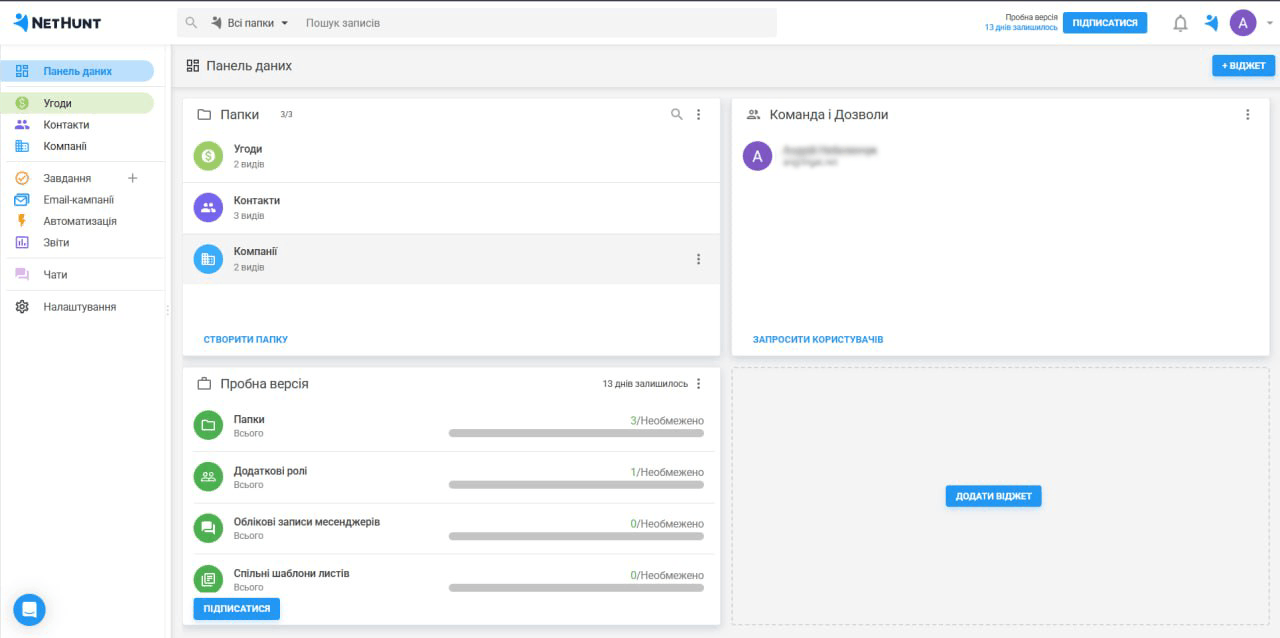
Three funnels have been implemented in the system:
- “Leads” — the initial processing of inquiries;
- “Sales” — working with deals;
- “Repeat sales” — customer return.
Each stage was carefully worked out and adapted to the company’s processes.
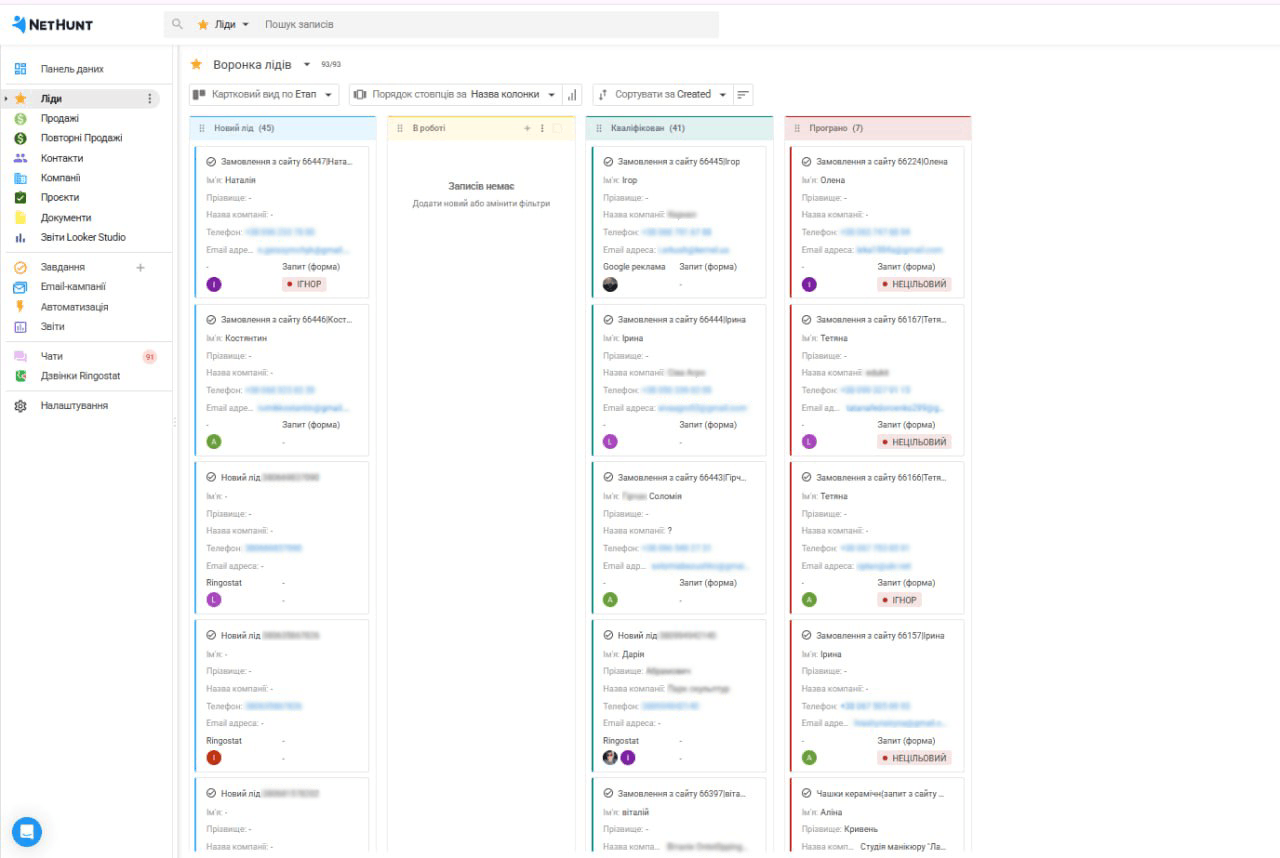
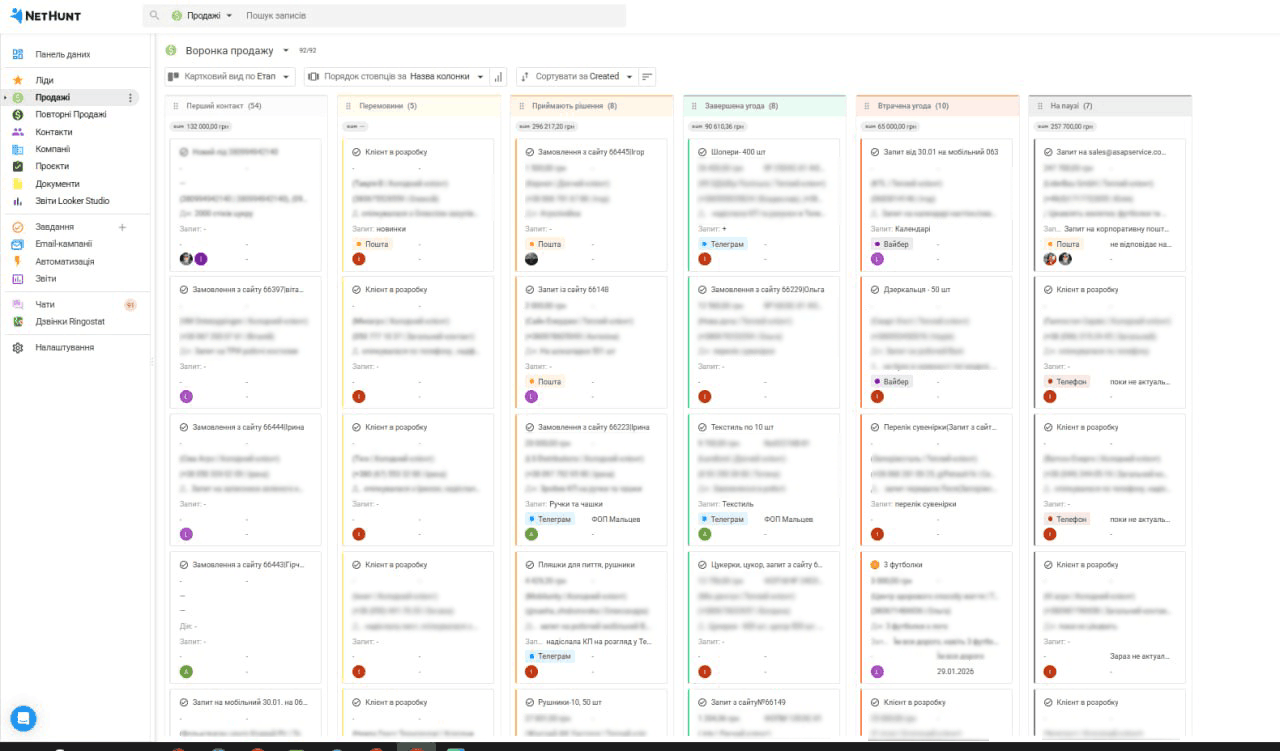
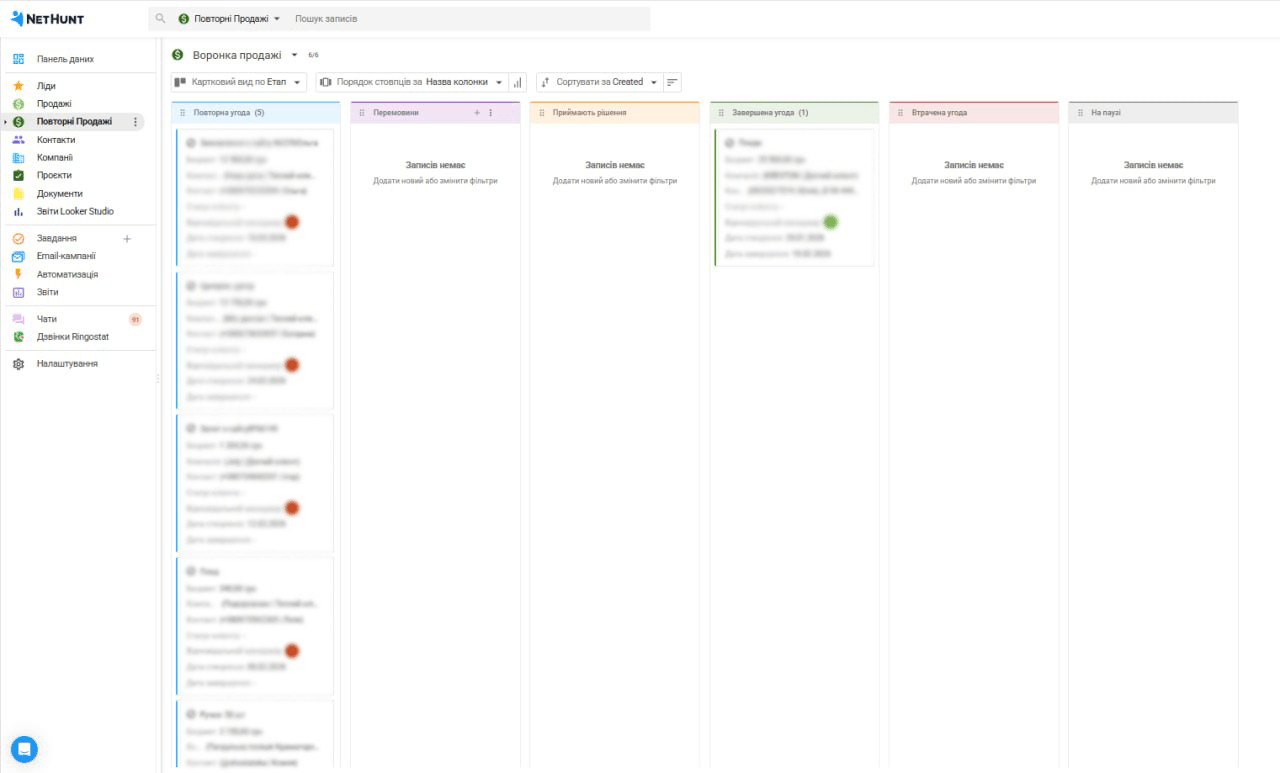
Next, we carried out the setup of the NetHunt CRM. The system was fully adapted to the client’s business and its structure.
As part of the implementation, we have carried out:
- field settings for leads, contacts, and deals;
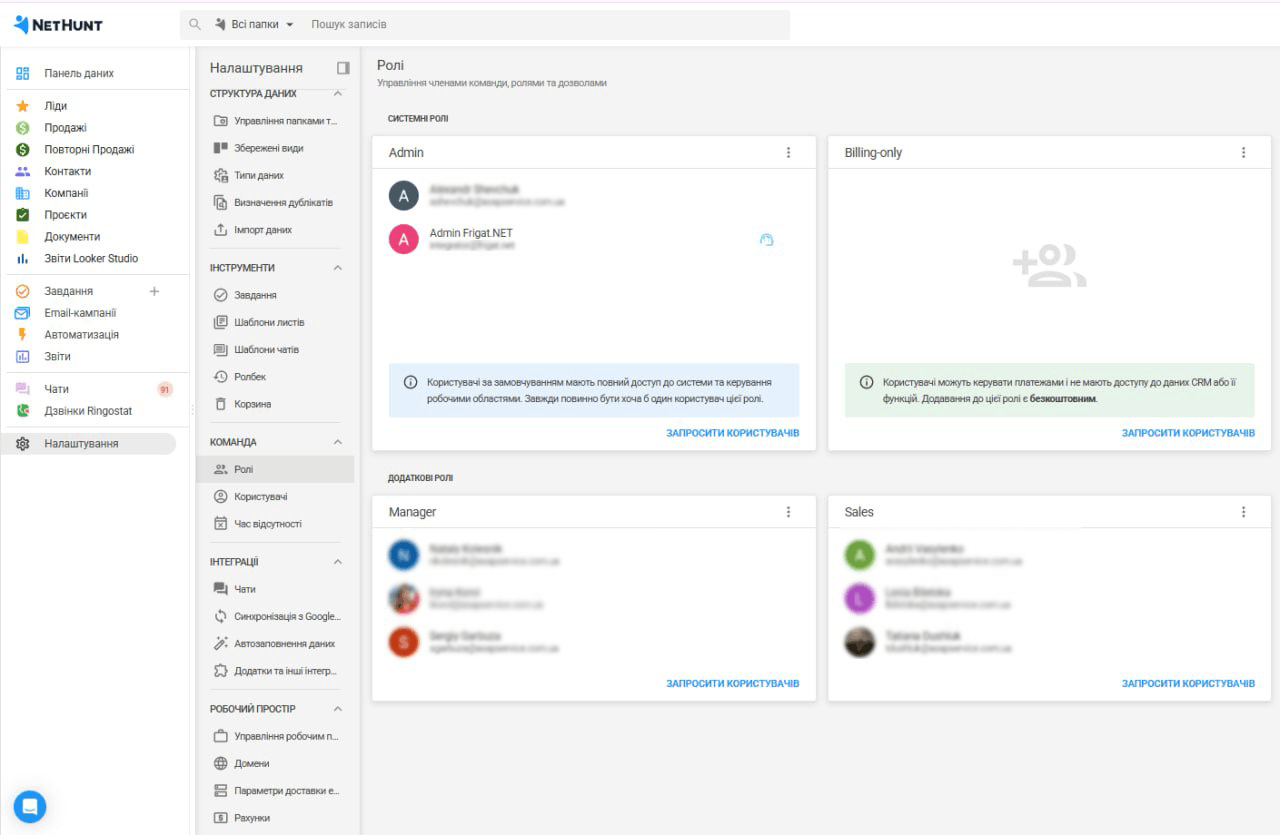
- the structure of role-based access rights;
- automatic lead generation;
- integration of communication channels;
- analytics setup for the manager.
As a result, the company received a centralized sales management system.
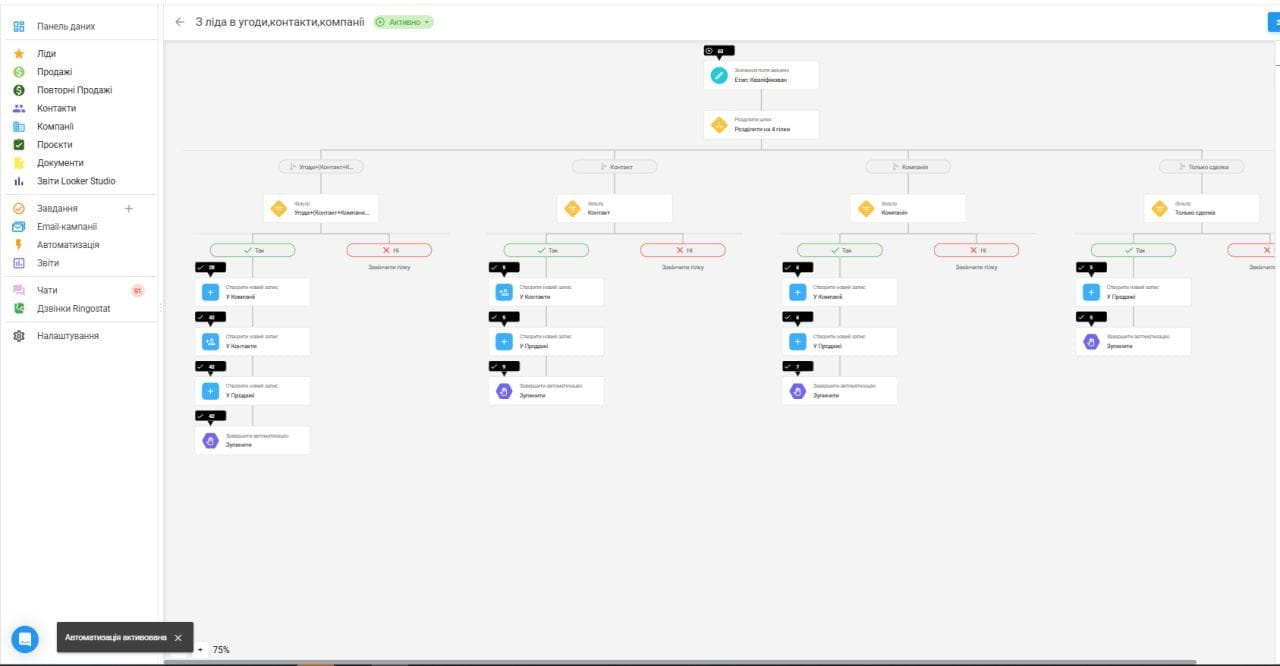
Integrations and automation
After the basic CRM setup, integration with external services was completed and automatic scenarios were configured.
The following were connected to the system:
- Looker Studio for analytics;
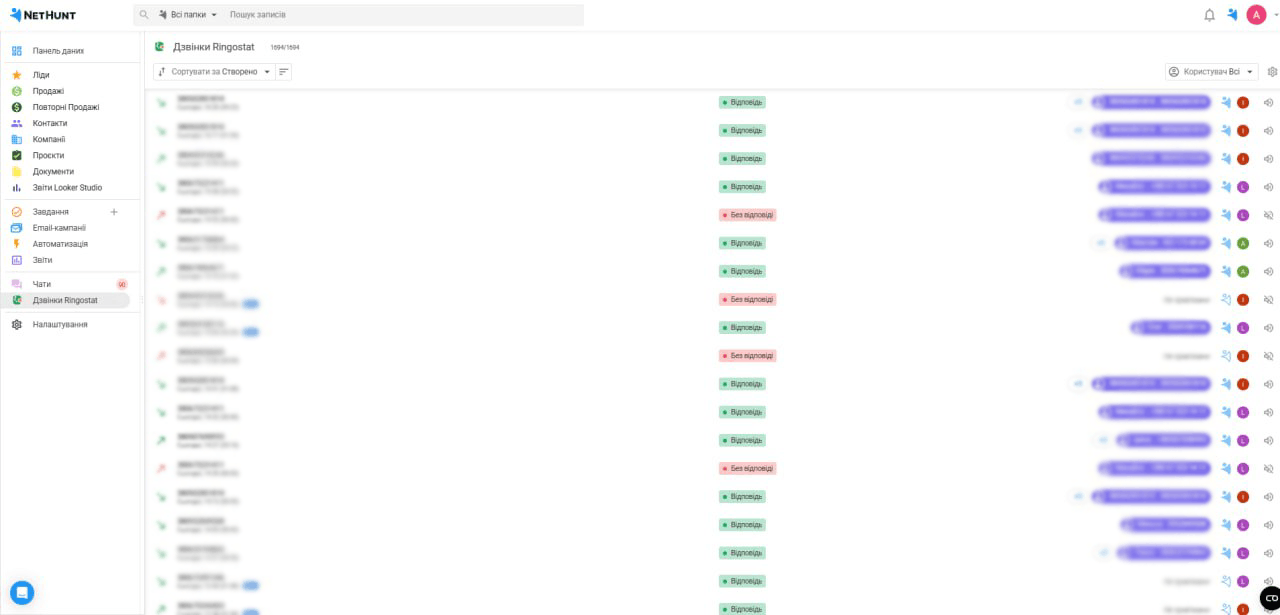
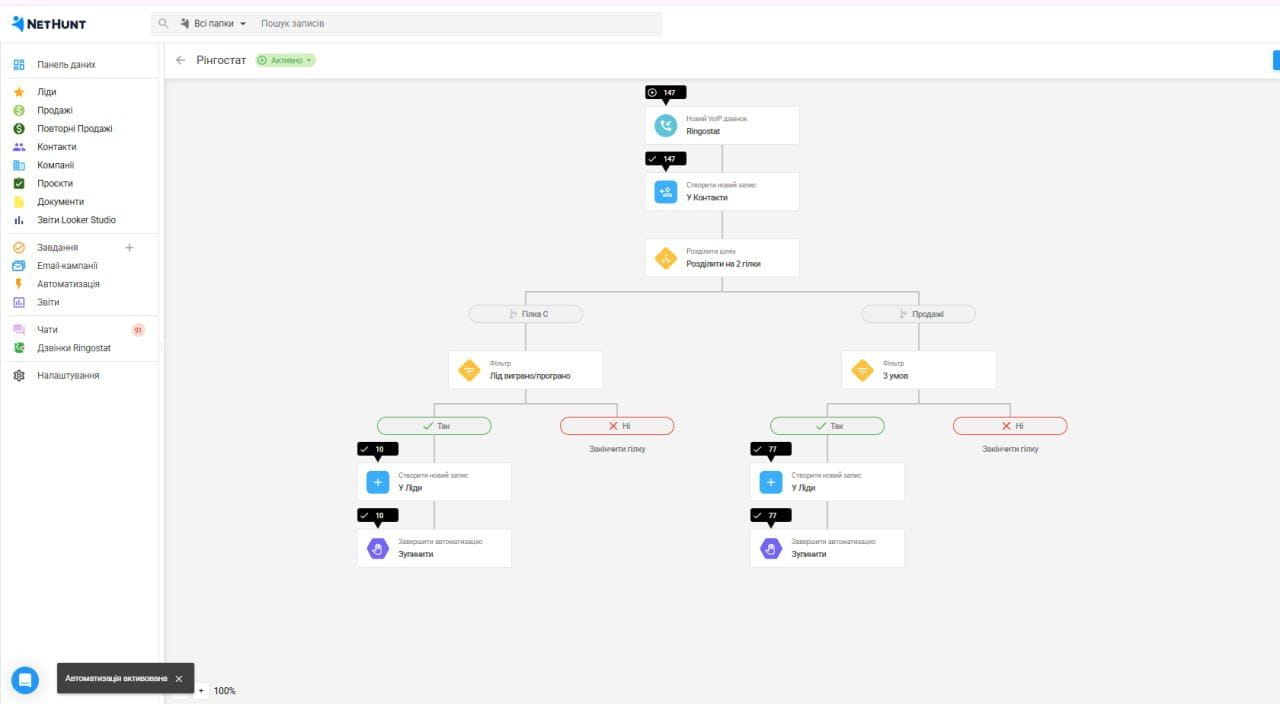
- Ringostat for working with calls;
- Make for process automation;
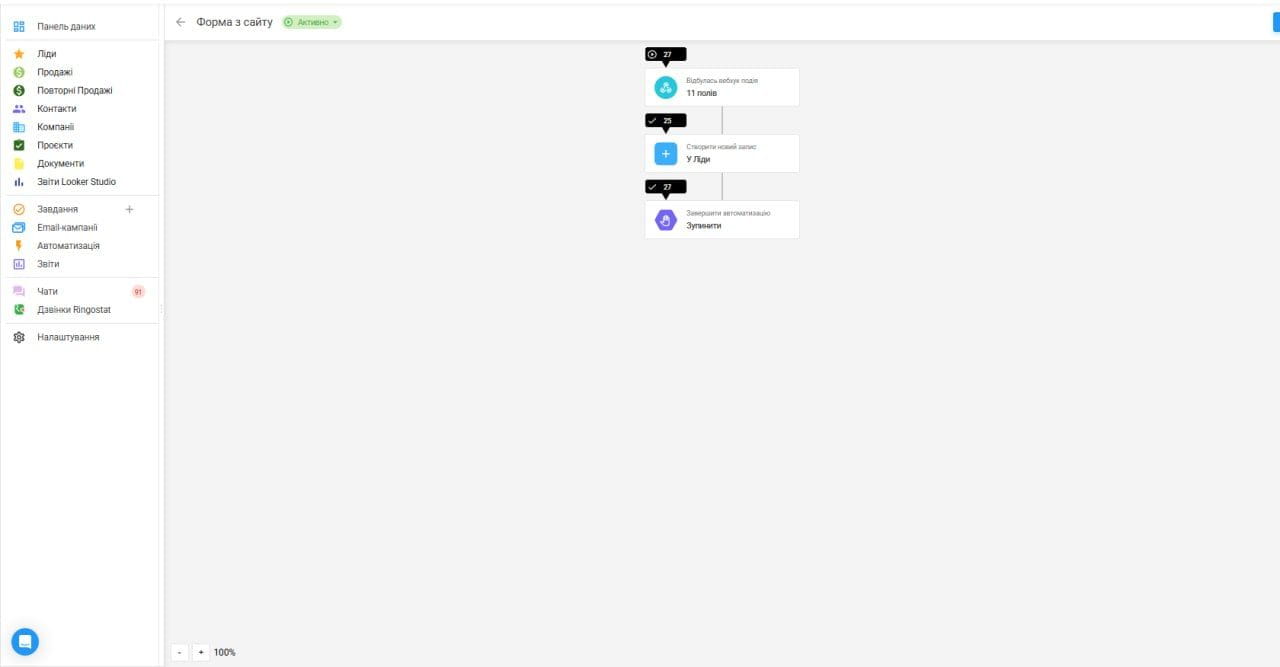
- website via Webhook for submitting applications.
This allowed us to combine all channels and ensure a stable data flow in the CRM.
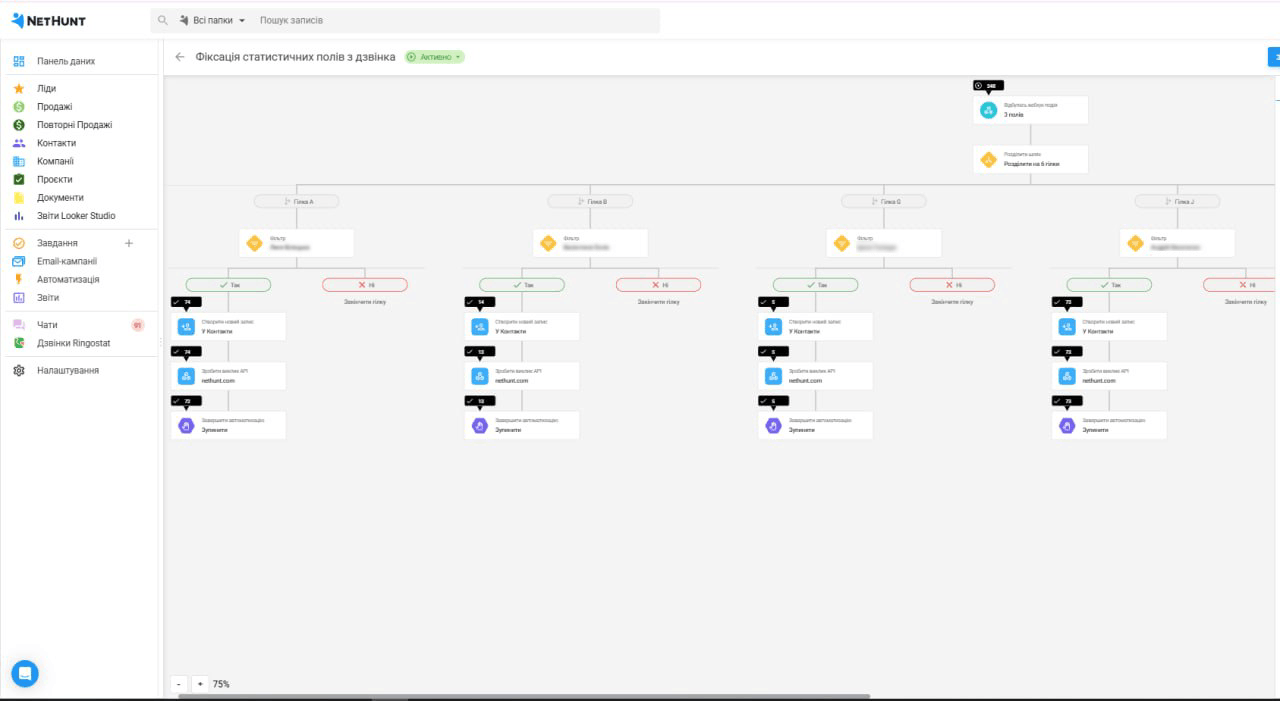
Next, key automations were set up, which reduced the workload on the team and sped up the processing of requests.
Implemented scenarios:
- automatic lead creation after submitting a form on the website;
- automatic transfer of the deal to the repeat sales funnel;
- creating a contact and company from a lead;
- recording statistical data on calls.
Automation has allowed minimizing manual input and reducing the number of errors.
Implementation results
The project is at the implementation stage; however, key systemic changes have already been achieved:
- a unified CRM infrastructure has been created;
- a system for working with leads and deals has been established;
- communication channels are combined;
- Transparency in sales appeared for the manager;
- analytics for key indicators has been implemented;
- reduced dependence on manual processes;
- A foundation has been prepared for scaling the sales department.
Quantitative indicators will be available after data is accumulated in the system.
CRM has become not just an accounting tool, but a sales management system that allows you to control processes, make decisions based on data, and scale the business without losing quality.
Customer review
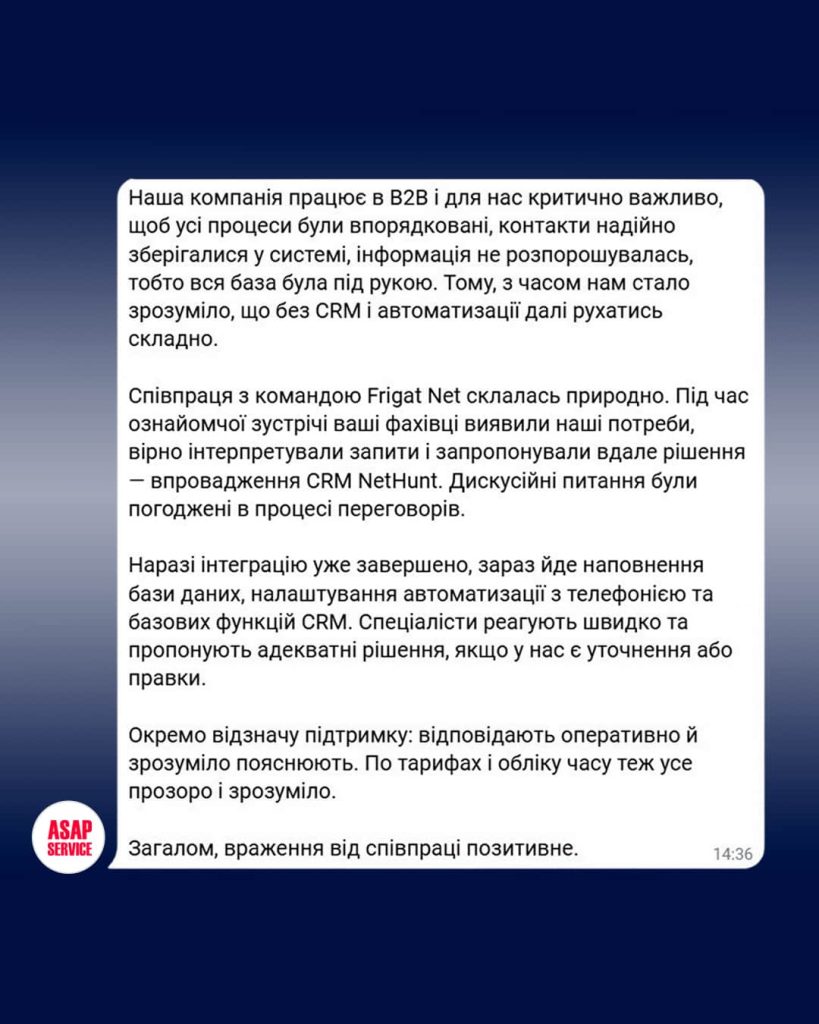
At the current stage, the client’s team is already working in the system and using the CRM as the main tool for sales management.
Do you want the same results?
Get a free CRM system audit for your business and find out which processes can be optimized right now.